
Can Cat Food Cause Diarrhea?
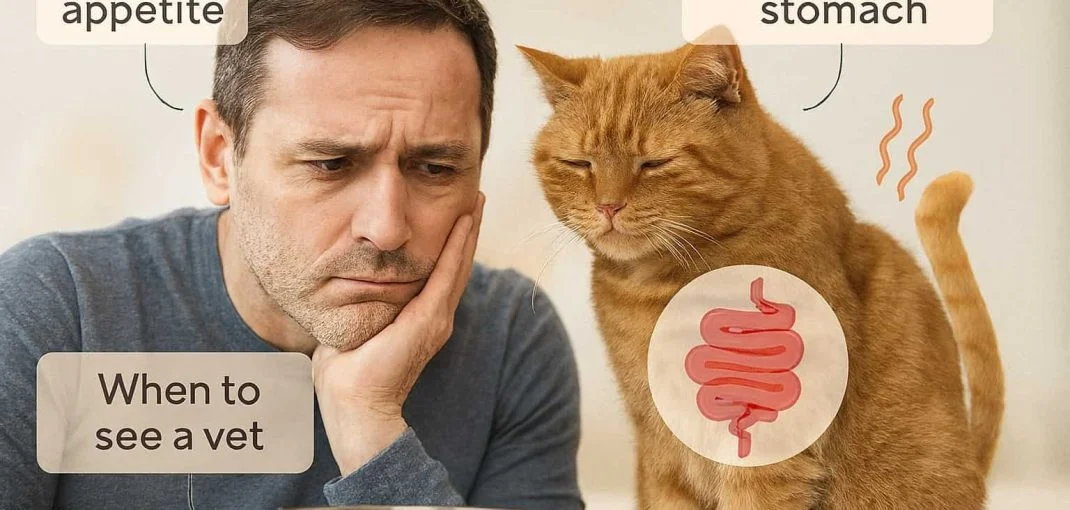
Why cat food sometimes leads to diarrhea
Here are the food-related reasons a healthy cat might develop loose stools:
- Abrupt diet change. Switching brands or going from dry → wet (or vice versa) overnight is the single most common trigger. A cat’s gut needs time to adapt.
- Food intolerance or allergy. Some cats react to specific proteins (chicken, fish, beef) or ingredients (dairy, wheat) with loose stools. Learn more about food allergies in cats.
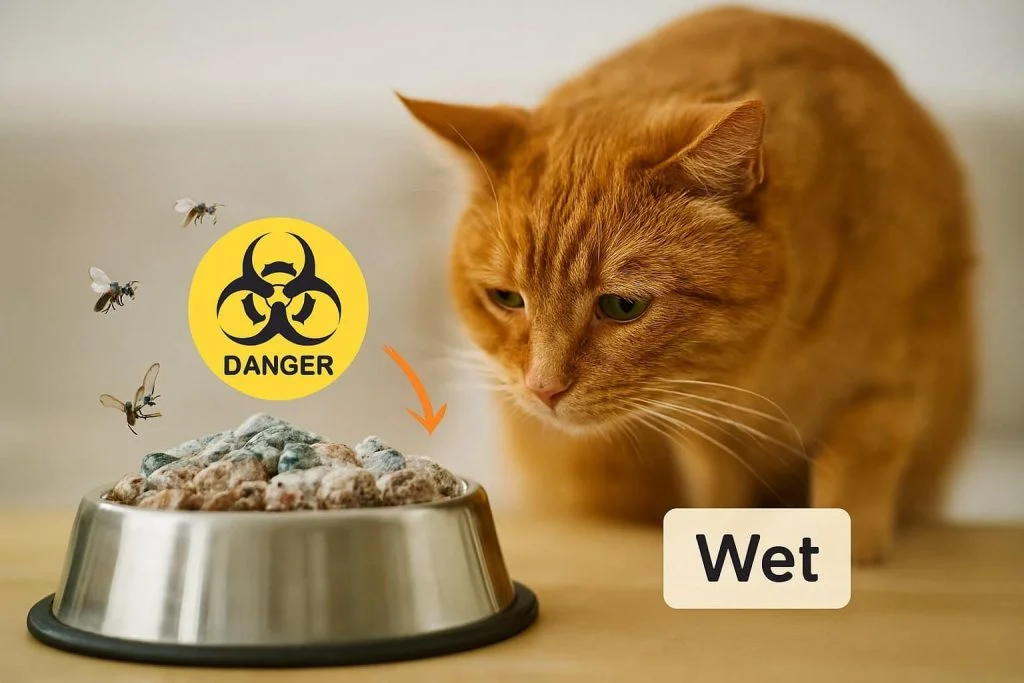
- Contaminated or spoiled food. Wet food left out too long or raw diets with bacterial contamination (e.g., Salmonella, E. coli) can cause diarrhea.
- High-fibre or unusual formulas. Some “weight management” or high-fibre diets can be too much for sensitive digestive tracts.
- Too much fat / rich food. Sudden introduction of a very fatty or rich diet (including human food) can cause loose stools or vomiting.
- Overeating / dietary indiscretion. Eating too much, snacking on table scraps, or sampling garbage/houseplants can produce diarrhoea.
- Batch or formula changes. Brands occasionally alter recipes or suppliers — the same product’s new batch can disagree with a cat.
How to tell if the food is the likely culprit
Look for patterns that point to diet:
- Timing: Diarrhea begins soon after a new food is introduced (hours to a couple of days).
- Consistency with switching: Symptoms resolve when you go back to the old food.
- No other systemic signs: If the cat is bright, eating and active, a diet change is more likely than a severe infection or organ disease.
- Reproducibility: Symptoms repeat each time a particular ingredient or brand is fed.
If diarrhea is sudden and accompanied by vomiting, lethargy, blood, or refusal to drink/eat, assume it’s serious and see a vet quickly.
What to do if you think cat food caused the diarrhea
Follow these practical steps — simple, safe, and vet-approved:
- Revert to the previous diet (if you recently switched). If the old food stopped the diarrhea in the past, try it again for a few days.
- Transition slowly next time. Mix the new food into the old over 7–10 days (or longer for picky/sensitive cats): start at ~10% new / 90% old, then 25/75 → 50/50 → 75/25 → full.
- Keep your cat hydrated. Offer clean water and monitor drinking. Wet food or warm water mixed into food helps intake. Dehydration is the biggest short-term risk. Learn more about cat dehydration signs.
- Use simple, highly digestible diets while the gut recovers — single-protein or veterinary gastrointestinal formulas work well.
- Consider probiotics made for cats (e.g., veterinary-recommended strains) to rebalance gut flora — ask your vet for brand suggestions.
- Try a trial of novel protein (turkey, duck, rabbit) if you suspect food allergy/intolerance. Give a single formula for several weeks to see results.
- Don’t give human anti-diarrheal meds. Many are unsafe for cats. Always check with your vet first.
- Record what your cat eats. Keep a feeding log (brand, batch, time introduced) — it helps your vet pinpoint triggers.
Preventing food-related diarrhea
Good habits reduce the risk:
- Research and store food correctly. Follow packet storage instructions; refrigerate opened wet food and discard leftovers after a safe time.
- Avoid abrupt switches. Plan changes in advance and transition slowly.
- Choose age-appropriate, complete diets. Kittens, adults and seniors have different needs.
- Be cautious with raw diets. Raw feeding carries higher risk of bacterial contamination unless handled and sourced very carefully.
- Watch for formula changes. If a previously tolerated food suddenly causes problems, check whether the brand changed its recipe.
- Limit table scraps. Human foods can be too rich or toxic and upset the gut.
When to contact the vet — red flags
Contact your veterinarian promptly if your cat has any of these signs:
- Diarrhea lasting more than 48 hours (sooner in kittens or older cats).
- Vomiting, lethargy, or refusal to eat/drink.
- Bloody, black-tarry, or very watery stools.
- Signs of pain, fever, or rapid weight loss.
- Multiple cats in the home become sick simultaneously (possible infectious cause).
Your vet may perform fecal tests, bloodwork, or imaging and recommend diagnostic diet trials, deworming, medication, or fluid therapy.
Final thoughts – Can Cat Food Cause Diarrhea
So, can cat food cause diarrhea? Absolutely — but usually it’s preventable or manageable. Most food-related cases stem from sudden changes, contamination, or intolerance. A cautious, slow transition and sensible food storage go a long way. If diarrhea persists or your cat shows worrying symptoms, don’t delay — seek veterinary care.
If you want help picking a gentler formula or digestible diet, visit MyPetHouse to explore cat food options and talk to our team. For urgent concerns, contact your local vet right away.
relatedAdvices
Best Pet Foods in Bangladesh: A Complete Guide for Dog & Cat Owners
Providing the right nutrition for your pet is essential for their health, energy, and overall well-being. In Bangladesh, pet owners have a variety of food options to choose from, but selecting the best one can be overwhelming. This guide will help you navigate the best pet food brands available for dogs and cats, ensuring your furry friends receive the highest quality nutrition.
How to Choose the Right Accessories for Your Pet – Expert Tips
Choosing the right accessories for your pet is essential for their comfort, safety, and happiness. With a vast array of options available, it’s important to select products that suit your pet’s size, breed, and lifestyle. Here are some expert tips to help you make the right choice.
The Ultimate Guide to Pet Litter: Keep Your Home Clean & Odor-Free
Maintaining a clean and odor-free home with pets is essential for both you and your furry friends. Choosing the right pet litter can make a significant difference in hygiene and convenience. Here are some key points to consider:

Fastest Pet Supply Delivery in Bangladesh – Why Pet Owners Love Us
At MyPetHouse, we take pride in offering the fastest pet supply delivery service in Bangladesh. Our commitment to quick and reliable delivery ensures that your pet never runs out of food, accessories, or litter. Here’s why pet owners trust us:
Is wet food bad for cats teeth?
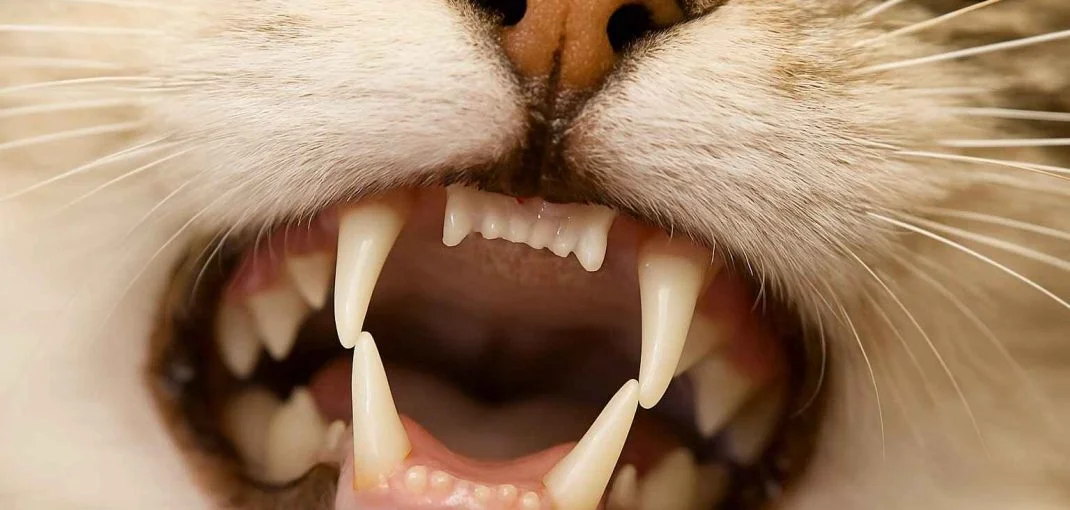
Short answer: No — wet food by itself doesn’t cause dental disease. Good dental care matters more than whether the food is wet or dry.
